AuraX·Computer Vision·completed·proprietary
Conflict-Aware Adapter Composition (C-AAC)
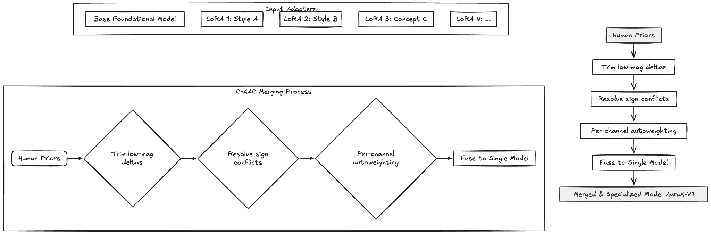
AuraX's proprietary paradigm shift in Virtual Try-On (VTON) and product imaging. Employs a modular, domain-specific AI architecture using a Conflict-Aware Adapter Composition (C-AAC) algorithm to merge multiple LoRAs on top of the FLUX foundational model without catastrophic forgetting or feature interference.
abstract
- At AuraX, I pioneered a paradigm shift in Virtual Try-On (VTO) by replacing slow, expensive monolithic AI models with a modular, domain-specific AI infrastructure layer tailored for commerce. To generate high-fidelity base images, we utilized the FLUX foundational model, refined via my proprietary Conflict-Aware Adapter Composition (C-AAC) method. C-AAC acts as a three-step conflict resolver that fine-tunes human-set priors, successfully mathematically fusing multiple LoRA adapters (e.g., specific demographics, poses, lighting) into a single optimized runtime model without characteristic feature degradation.
multi Stage Data Pipeline
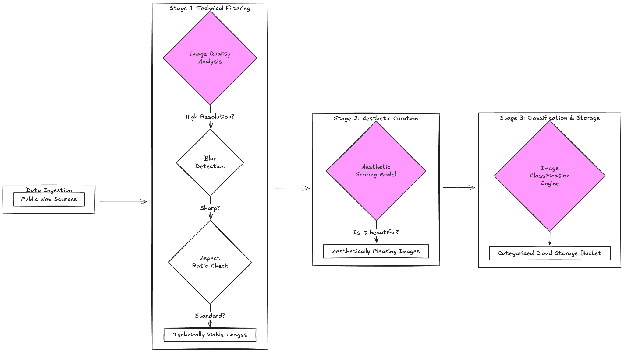
- Public datasets were rigorously filtered using my curated multi-stage pipeline focusing on resolution, sharpness, and aspect ratios. To align with commercial e-commerce standards rather than generic 'moody' aesthetics, we trained a proprietary Brand-Centric Aesthetic Model using a human-in-the-loop scoring process. Our initial specialized adapters were fine-tuned on a highly curated corpus of just 5,000 images, forming a hybrid library that achieves production-grade realism across key garment layers like denim, silk, and leather.
defensibility And Results
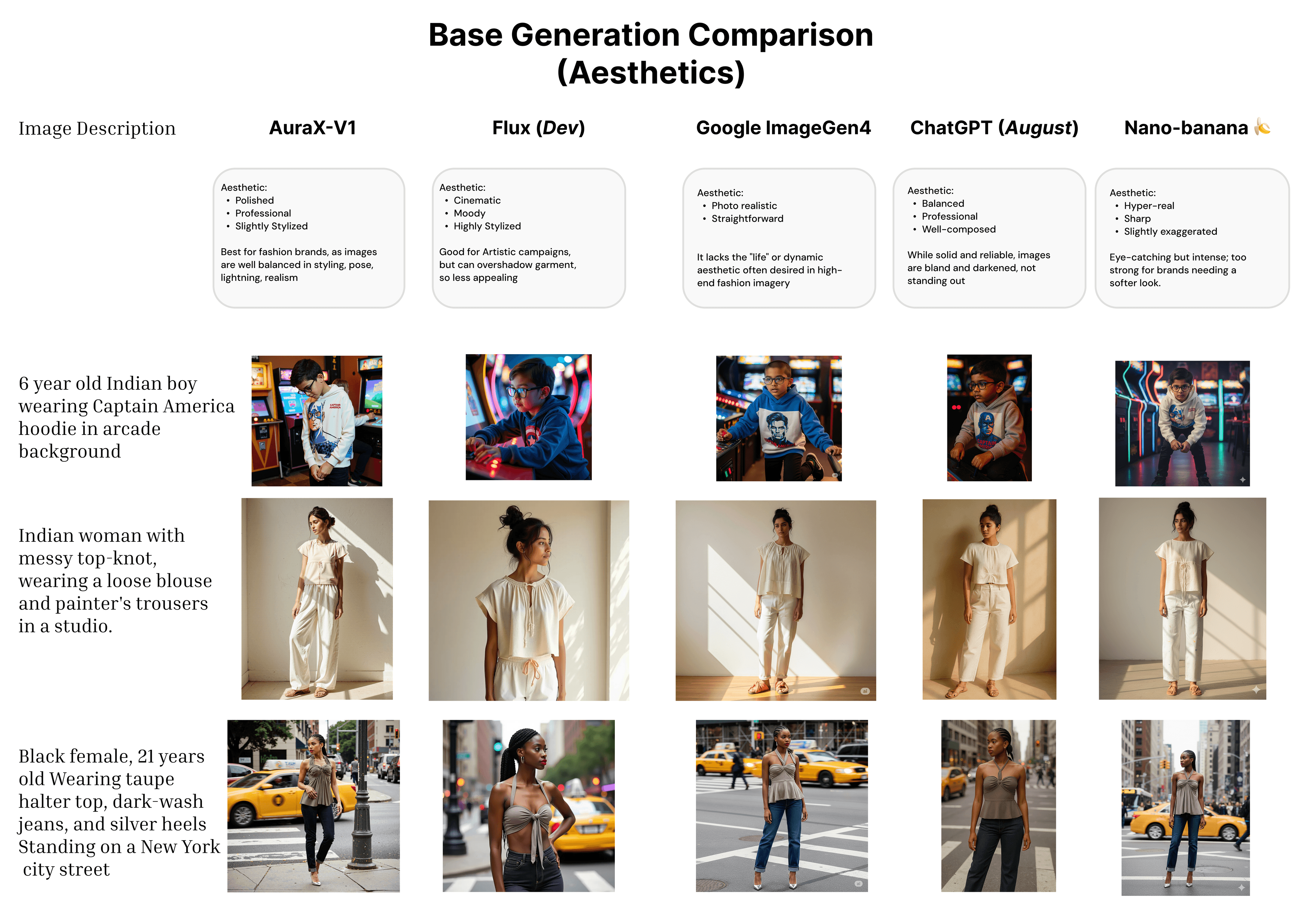
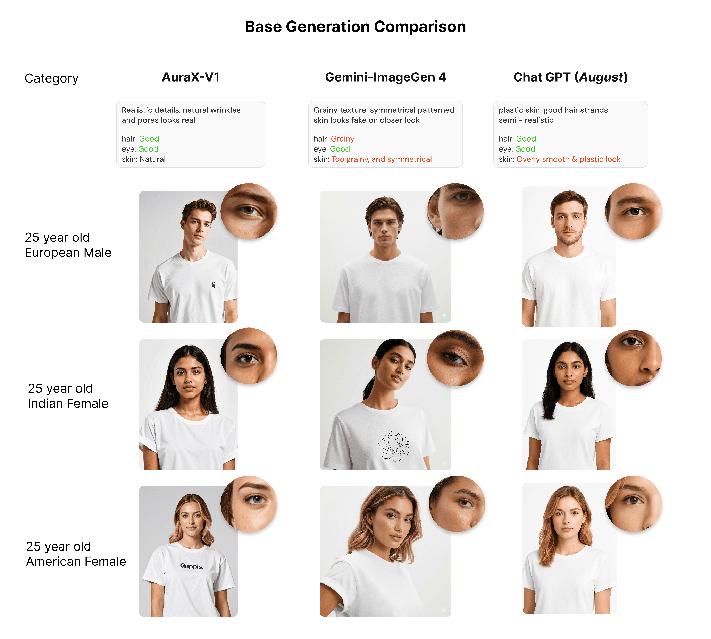
- The C-AAC algorithm's ability to preserve specialization during model merges yields a powerful technical moat, validated quantitatively by high LPIPS scores and a low interference index. Evaluated against base Flux-dev, Google's Imagen 4, OpenAI's ChatGPT (August), and Nano-banana, my AuraX-V1 model demonstrated unequivocal superiority in rendering commercial realism and brand-desirable aesthetics with clean compositions and natural skin textures.
Gallery